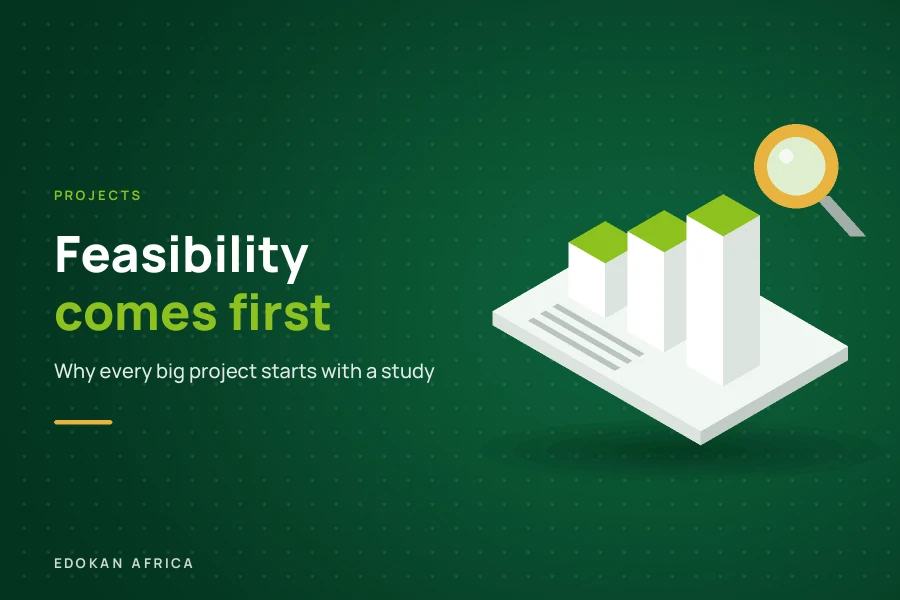
Before anyone builds a hostel, a campus or an airport, someone has to answer a simple question: will it work? A feasibility study is how serious investors and institutions answer it, with evidence instead of hope.
This article is a general guide, not legal or financial advice. Laws and procedures change, so confirm the details with the relevant authority or a qualified adviser for your project.
What a feasibility study answers
- Demand: who will use it, how many, and what they can pay.
- Site and land: whether the land is available, suitable and properly owned.
- Legal route: which approvals are needed and how the partnership will be structured.
- Environment and community: the impact on people and land, and how it will be managed.
- Engineering and cost: what will be built, in what phases, and roughly what it will cost.
- Money: where income comes from, what returns look like, and what support government may need to give.
Why it matters
A good study protects everyone. Investors avoid putting money into a project that cannot pay its way. Institutions avoid promises they cannot keep. And when the answer is yes, the study becomes the foundation for financing, approvals and contracts.
How long it takes
For a large project, a full study often takes several months. Simple projects can be quicker. Rushing it usually costs more later.
The role of a local partner
International advisers bring technical skill, but they need access: to data, sites, officials and communities. A local partner coordinates that work on the ground, so the study reflects real conditions.
The outcome
A clear go or no-go decision, an investment case, and a plan for how the project will be structured and delivered.
Talk to us
EDOKAN Projects works with investors, developers and institutions on projects in Ghana and across Africa, from the first study to final handover. Find out how we work or start a conversation.