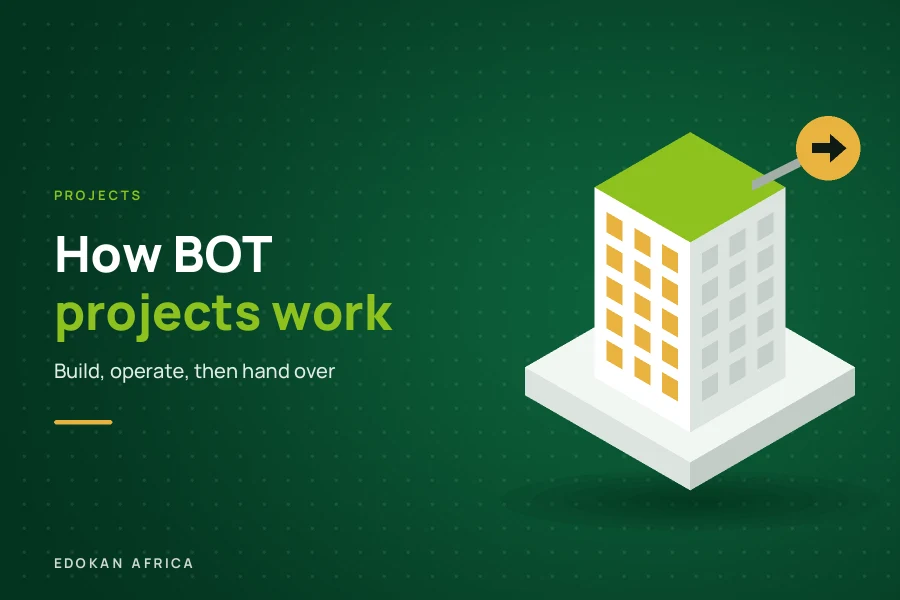
Schools, hostels, roads and airports cost more than most governments can pay for at once. Build-Operate-Transfer, or BOT, is one way to get them built without the state paying everything up front. A private partner pays to build the asset, runs it for an agreed period, earns from it, then hands it over to the state.
This article is a general guide, not legal or financial advice. Laws and procedures change, so confirm the details with the relevant authority or a qualified adviser for your project.
The three stages
- Build: a project company, owned by the investors and their partners, finances, designs and builds the asset.
- Operate: the company runs and maintains the asset for a fixed term, often 20 to 30 years, and earns revenue from it.
- Transfer: at the end of the term, the asset passes to the government in good working condition.
How the investor gets paid back
There are two main sources of money. User fees come from the people who use the asset: hostel rents, landing fees, tolls. Availability payments come from the government or institution for keeping the asset open and in good order, whether or not it is busy. Many projects mix the two so that income is steadier.
Who does what
- The government or institution provides land, rights to run the asset, approvals and sometimes guarantees.
- The investor provides most of the money and the expertise to build and run the asset.
- A local partner handles approvals, community relations, local suppliers and workers, and keeps the project moving on the ground.
Why BOT works for both sides
The public gets an asset sooner, without a large upfront bill, and the risk of building late or over budget sits with the private side. The investor gets a long, contracted income. At the end, the country owns the asset outright.
What to watch
- Demand: if too few people use the asset, user-fee income falls short.
- Currency: income in cedis and loans in dollars can pull apart.
- Changes in government: good agreements are approved properly and protected so a new administration cannot simply cancel them.
Every BOT project should start with a proper feasibility study that tests these risks before anyone commits money.
Talk to us
EDOKAN Projects works with investors, developers and institutions on projects in Ghana and across Africa, from the first study to final handover. Find out how we work or start a conversation.