A young business wins a big contract. The client is credible. The supplier is ready. Then someone asks for a bank guarantee or a letter of credit, and the bank replies that the business is too young. It is one of the most frustrating moments in growing a business, and it happens more often than most people think.
Understanding these instruments will not make the bank say yes on its own. But it will help you ask for the right thing, prepare properly and spot other ways forward.
Why these instruments exist
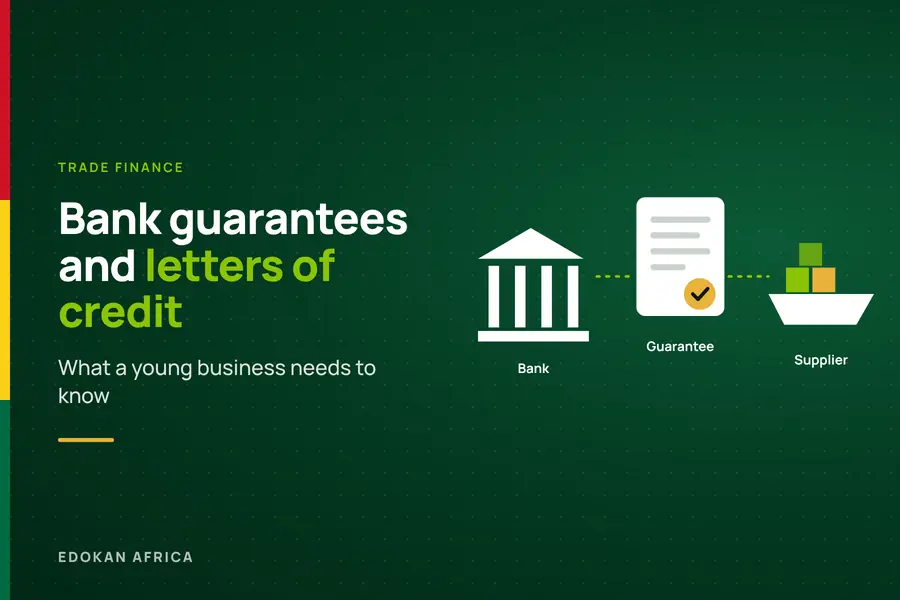
In any big deal, someone carries the risk. The buyer worries the work will not be done. The supplier worries they will not be paid. A bank guarantee or letter of credit puts a bank (or sometimes an insurer) in the middle, promising to pay if certain conditions are met. That promise is only worth something if the bank is confident it will not lose money, which is why banks look so hard at the business asking for it.
The main types, in plain words
Bid bond (tender guarantee)
Some tenders ask for one when you submit your bid. It promises the client that if you win and then walk away, they will be paid an agreed amount.
Advance payment guarantee
If the client pays you an advance to start work, they may want this. If you do not deliver, the bank repays the advance.
Performance guarantee (performance bond)
This promises the client a sum, often a percentage of the contract value, if you fail to complete the work as agreed.
Letter of credit (LC)
Used mainly in trade. The buyer’s bank promises to pay the seller once the seller presents the documents the LC lists, such as a bill of lading, invoice and inspection certificate. The bank pays against documents, not against the goods themselves, so every detail must match exactly. LCs are usually governed by the ICC’s rules known as UCP 600.
Standby letter of credit (SBLC)
Works like a guarantee: the bank pays only if the customer fails to pay or perform. A supplier abroad may accept an SBLC instead of a full payment upfront.
Insurance bond (surety bond)
Some insurance companies issue bid, advance payment and performance bonds instead of a bank. They can be easier to obtain, but not every client accepts them, so check the tender documents first.
Side by side
| Instrument | Who issues it | Who it protects | When it pays |
|---|---|---|---|
| Letter of credit (payment LC) | Buyer’s bank | The seller | When the seller presents the agreed documents. This is the normal way the seller gets paid. |
| Standby letter of credit (SBLC) | Buyer’s or contractor’s bank | The seller or client | Only if the customer fails to pay or perform. A backup, not the normal payment route. |
| Performance guarantee | Contractor’s bank | The client | If the contractor fails to deliver the contract, usually up to a fixed share of its value. |
| Insurance (surety) bond | An insurance company | The client | Similar to a bank guarantee, but only where the client accepts insurance bonds. |
Each bank and insurer sets its own rules. Approval, collateral and fees vary, and the client or supplier decides which instruments, and which issuers, it will accept. Confirm this in writing before you apply.
What a bank looks at
A bank that issues a guarantee is taking on your risk. Before it does, it typically wants to see:
- Trading history: often two or three years of accounts. This is where young businesses get stuck.
- Security: cash held with the bank, property, or other assets it can rely on.
- The contract itself: who the client is, how payment works and whether the terms are fair.
- Your ability to deliver: experience of the owners, key staff, suppliers and a realistic plan.
- Clean records: registration, tax compliance and bank statements. Our guide to why the bank keeps saying no covers this in detail.
Options when you are “too young”
- Cash-backed guarantee: if you can deposit cash with the bank, it may issue a guarantee against it. This ties up money, but it can unlock a contract.
- Insurance bonds: some general insurance companies in Ghana offer bid, advance payment and performance bonds. Check first whether your client will accept a bond from an insurer, because some insist on a bank.
- Negotiate the structure: ask the client for staged payments, a smaller advance or a lower guarantee percentage. Ask the supplier for part-payment against production milestones or inspection.
- Use the buyer’s strength: if your client is a large, reputable organisation, ask your bank whether it can finance against the contract or the money the client will pay you (sometimes called contract or receivables finance).
- Partner with an established firm: a joint venture or subcontract with a business that already has a banking track record can carry the guarantee while you build yours.
- Supplier-side support: some exporters can offer payment terms backed by their own country’s credit insurer. Our article on Sinosure explains how that works with Chinese suppliers.
A simple example
Example (for illustration): Yaw’s company, two years old, wins a contract to supply water pumps to a district project. The client wants a 10% performance guarantee, and the manufacturer abroad wants either full payment or an SBLC before production.
His bank declines an unsecured guarantee. Yaw does three things: he gets a performance bond from an insurer that the client agrees to accept; he negotiates 40% payment to the manufacturer at order and 60% after inspection, paid from the client’s first instalment; and he asks the bank to hold the client’s payments in a dedicated account. The bank agrees to a smaller, partly cash-backed facility. Not every deal works out like this, but breaking the problem into pieces often opens doors that a single big request closes.
Watch out for
- “Guarantee providers” who ask for large upfront fees: fake bank guarantees and SBLCs are a known fraud. Deal with licensed banks and insurers directly, and confirm any instrument with the issuing institution.
- Wording you do not understand: some guarantees can be called “on first demand”, without proof that you failed. Read the text carefully and take advice.
- Documents that do not match: under an LC, a small spelling difference can delay payment. Check every document against the LC before shipping.
Start this week
- For your next big contract, list exactly which instrument is being requested and why.
- Ask the client whether they will accept an insurance bond or staged payments.
- Prepare a short pack for your bank: registration, statements, the contract, your delivery plan and the experience of your team.
- Ask your bank what security would make a guarantee possible, not just whether it is possible.
- Never pay a third party to “arrange” a guarantee without confirming them with the issuing bank.
EDOKAN Africa is not a bank, lender, insurer or export credit agency, and cannot issue or guarantee any instrument. This article is general information, not financial or legal advice.
Sources
- International Chamber of Commerce, UCP 600 and rules for trade finance: iccwbo.org
- Hollard Ghana, Bonds insurance: hollard.com.gh
- GLICO General, Bonds: glicogen.com